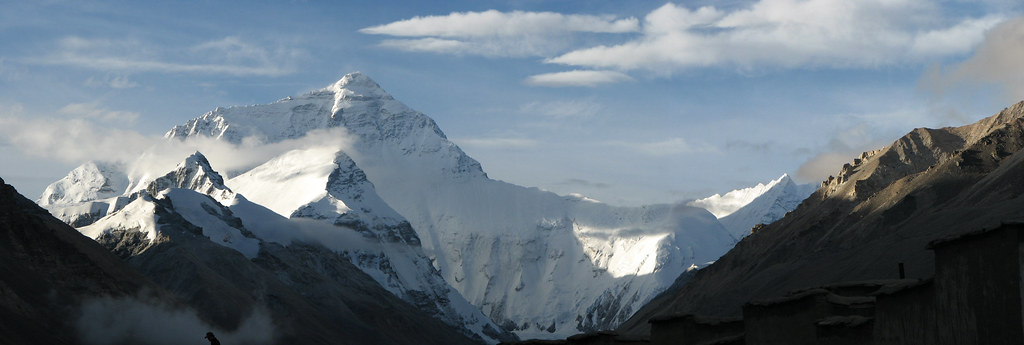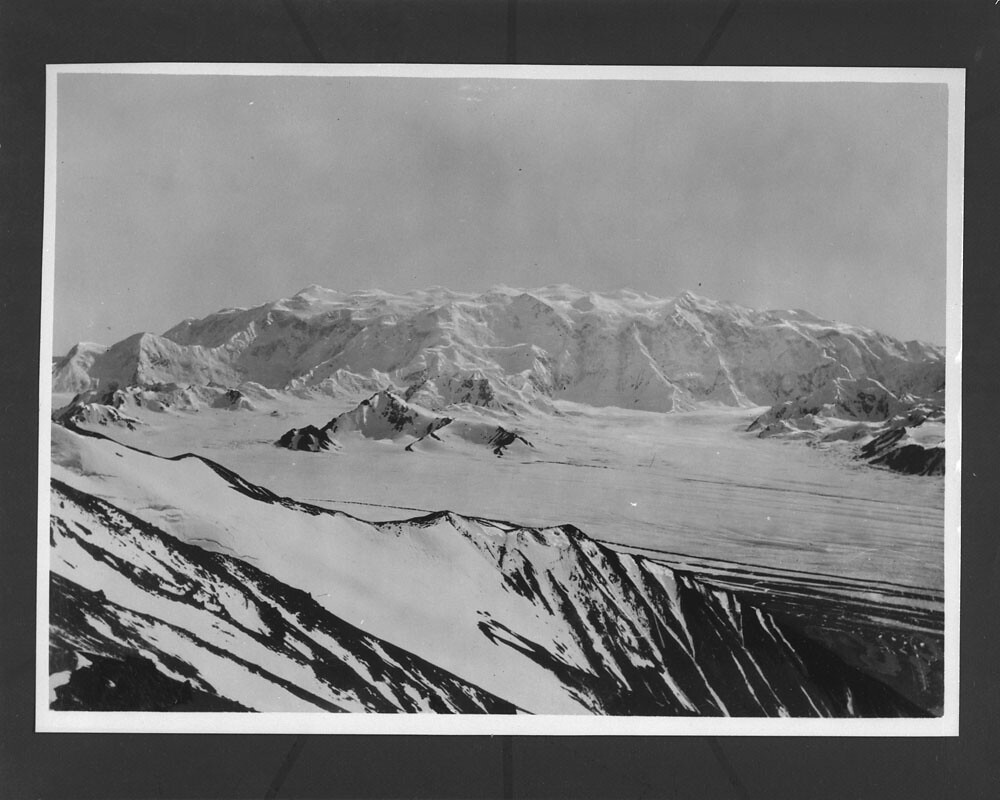
Mount Logan rises 5,959 metres above the Saint Elias range in the southwestern Yukon, sixty kilometres from the Pacific and roughly twenty from the Alaskan border. It is the second-highest peak in North America and, by some measures, the largest mountain on earth by mass. In 1925, no one had climbed it, and almost no one had been within a day's walk of its base.
The 1925 expedition was organised by the Alpine Club of Canada and led by Albert MacCarthy, an American climber based in British Columbia who had made the first ascent of Mount Robson in 1913. The team comprised eight men. They left the rail terminus at McCarthy, Alaska — no relation to the leader — on 12 May.
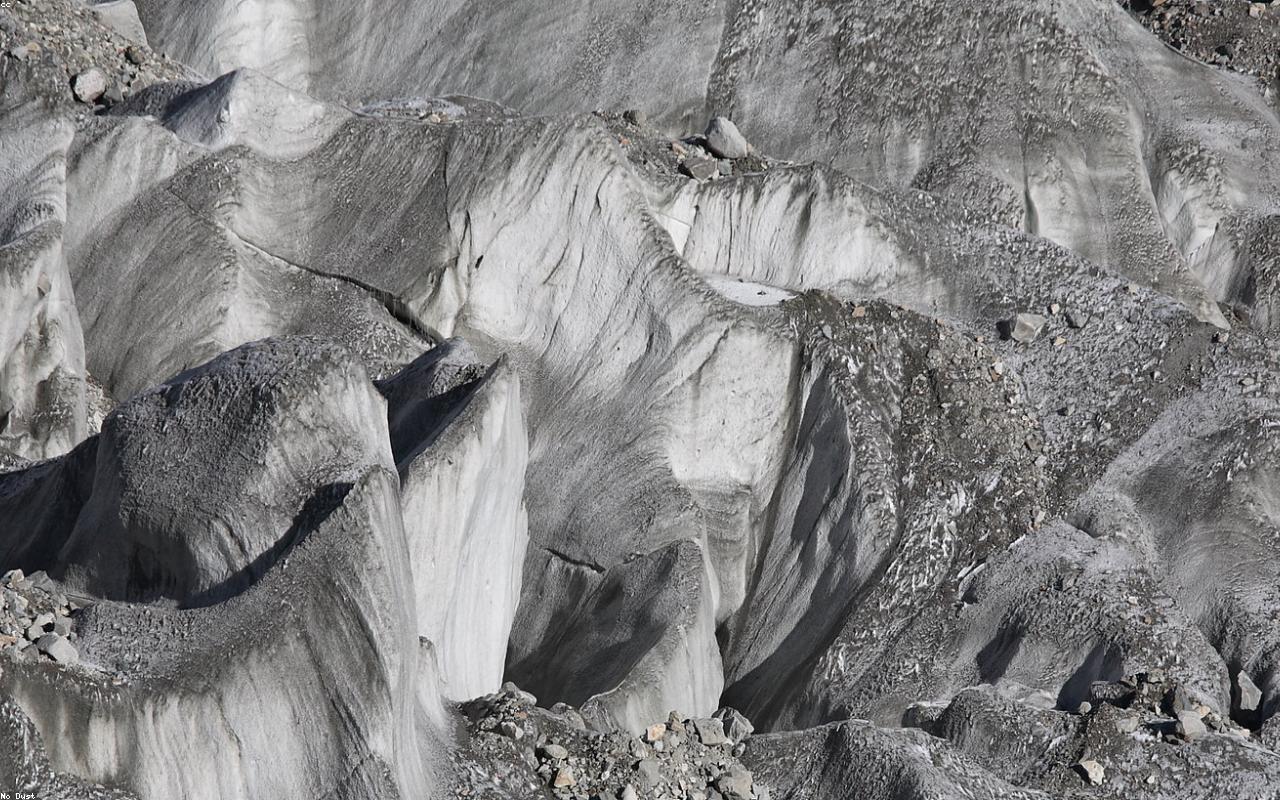
The approach to Logan's base camp took forty-four days. The party crossed the Chitina River, the Skolai Pass, the Russell Glacier, the Walsh Glacier, and the King Trench. They moved roughly seven kilometres a day with sledges and snowshoes. The cache system they used was modified from Arctic practice: each man carried his own load, returned, and re-carried, doubling each day's distance covered but allowing the loads to stay manageable at altitude.
Base Camp was placed on the Quintino Sella Glacier at 3,000 metres on 15 June. From there the climbing began. The route the team chose, now called the King Trench route, is still the standard line and is climbed each summer by roughly twenty parties. The 1925 ascent took twenty-five days from Base Camp to summit.
The party reached the main summit on 23 June 1925 at about six in the evening. Six men stood on top: MacCarthy, Allen Carpé, Henry Hall, William Wood Foster, Norman Read, and Andy Taylor. Two men, Fred Lambart and Hamilton Laing, had turned back at the high camp.
The descent nearly killed all of them. A storm pinned the summit party in their high camp for four days. They had food for two. They came down by feel, with seven of the eight at one point or another suffering snowblindness. MacCarthy himself was led down the upper glacier on a short rope by Andy Taylor, who was the only member of the party still able to see.
They reached Base Camp on 30 June, eighty days after leaving the rail terminus, having lost an average of nineteen kilograms each. Two of the men were found, in subsequent medical examinations in Vancouver, to have frostbitten lung tissue from breathing supercooled air at altitude. None of the men lost fingers or toes, which the expedition doctor, Hubert Wilkins, attributed to a strict regime of dry sock changes and the use of fur-lined caribou-skin boots procured from Athabaskan trappers at Burwash Landing.
The expedition's significance was understood at the time. The Alpine Club of Canada had been founded in 1906 and had spent its first two decades establishing itself as a serious institution. The first ascent of Logan, organised entirely by the club and accomplished without European leadership or significant European funding, was the moment Canadian mountaineering came of age. The Royal Canadian Geographical Society granted the club its founding endowment the following year.
MacCarthy himself wrote the official account, published in 1926 as The First Ascent of Mount Logan. The book is restrained in a way that the 1953 Everest book is not. There are no chapter epigraphs, no rhetoric about destiny or national character. The longest passage of description, on the summit itself, runs to three sentences.
Allen Carpé, the youngest member of the summit party, was a Bell Labs telephone engineer with no formal mountaineering training. He had climbed his first peak, Mount Sir Sandford in the Selkirks, three years earlier. He died on Mount McKinley in 1932, swept into a crevasse on the Muldrow Glacier at the age of thirty-eight. He had been on McKinley conducting cosmic-ray observations for the Bartol Research Foundation, an experiment that was a precursor to the later work that won Victor Hess the 1936 Nobel Prize in physics.
Andy Taylor, the Yukoner who led MacCarthy down through the storm, was the only member of the party with serious northern experience. He had trapped on the Stikine River for fifteen years. He was the one who selected the caribou-skin boots and the dried-salmon ration and the bear-grease cold cream that the party used on their faces against windburn.
Taylor stayed in the Yukon after the climb. He guided three further expeditions onto Logan in the 1930s, ran a trapline through the second World War, and died in Whitehorse in 1955 at the age of seventy-three. His Logan ice axe, a wooden-shafted Bhend with a steel head, is in the collection of the Yukon Beringia Interpretive Centre in Whitehorse.
The route the 1925 party climbed has been improved in detail by later parties but not fundamentally rerouted. The King Trench is still the way. Modern parties fly into Base Camp by ski-equipped Otter from Kluane Lake, which removes the forty-four-day approach. Modern parties also climb the route in fifteen to twenty days, rather than twenty-five, partly because of better acclimatisation protocols and partly because the storm patterns on Logan are better understood and modern teams pick weather windows the 1925 party could not have known existed.
What modern parties experience as the same is the upper plateau. Logan has a vast summit plateau, roughly twenty kilometres long at 5,400 metres, with multiple subsidiary summits. The plateau is one of the largest above-five-thousand-metre features on earth. Crossing it in storm, with whiteout and no GPS, is the same problem in 2026 as it was in 1925.
The Logan plateau is also one of the coldest places in North America that humans regularly visit. The Canadian climate research station, Eclipse Icefield, sits on its northern shoulder and has recorded temperatures of minus seventy-seven degrees Celsius. The 1925 party experienced minus forty-six on the summit day, which is mild by Logan standards.
The Canadian Alpine Club still organises a Logan centennial expedition every twenty-five years. The 2025 centennial party of twelve, led by Quebec guide Marie-Pierre Beaulieu, climbed the King Trench in seventeen days and returned without injury. Beaulieu carried, in her pack, a photograph of MacCarthy's party at base camp in 1925, which she placed on the summit and brought down again.
The photograph is in the Alpine Club archive in Canmore. It shows eight thin men, in wool and canvas, standing in front of a pyramidal tent. Six of them would summit the second-highest mountain in North America two weeks later. Two would turn back. All of them would come home.
The 1925 ascent is sometimes called, in Canadian alpine circles, the cleanest first ascent of any major North American peak. No one died. No one lost a finger. The expedition was paid for, organised by, and accomplished by Canadians, with help from the Yukon trappers who knew the country. It is a model of a particular kind of expedition, one that has not often been repeated.
Mount Logan is climbed today partly because of what the 1925 party did and partly in spite of what they had to do to do it. The route is now well-mapped, the weather is forecast, the rescue is possible. None of those things were true on 23 June 1925, when six men stood on a high cold plateau and looked east into the Yukon and west into Alaska and turned around to come down.