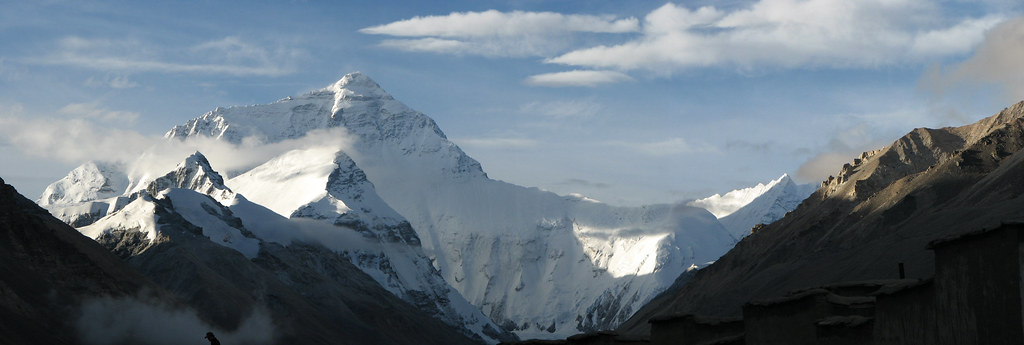
Minya Konka rises 7,556 metres in the Daxue Shan range of western Sichuan, fifty kilometres west of the city of Kangding. In 1932 it was the highest mountain in China that had been measured by triangulation and was thought, briefly, to be higher than Everest. The measurement was wrong. The expedition that climbed the mountain went anyway.
The American party that summited on 28 October 1932 numbered four climbers — Terris Moore, Richard Burdsall, Arthur Emmons, and Jack Young — and was supported by twelve Tibetan porters from the local Khampa population. The expedition had originated as a joint project of the Sierra Club and the Explorers Club of New York and had been organised by Burdsall, a thirty-six-year-old civil engineer with a substantial private income.
The climb is barely remembered in the English-language mountaineering literature. It has no chapter in the standard one-volume histories. The reasons for the obscurity are several: the expedition was small, the mountain is not on the list of eight-thousand-metre peaks, and the political conditions in western China in 1932 made the climb a logistical anomaly that did not lead to subsequent expeditions.
China was in the seventh year of its civil war. The Kuomintang controlled the coast and the major railway lines. Communist forces under Mao Zedong had retreated to Jiangxi province and were preparing the operations that would become the Long March. Sichuan was governed by a coalition of warlords. The Daxue Shan range itself, which sits at the geographical edge of Tibetan and Han Chinese territory, was administered by neither side and was effectively a Khampa autonomous zone.
The expedition reached Kangding, then known as Tatsienlu, on 18 August 1932 after a three-month overland journey from Shanghai by train, riverboat, and pack mule. The party paid the local Khampa headman, a man named Tashi Tsering whose grandson now runs a guesthouse in modern Kangding, for the use of pack ponies and twelve porters. The fee was settled in silver dollars and a Mannlicher rifle.
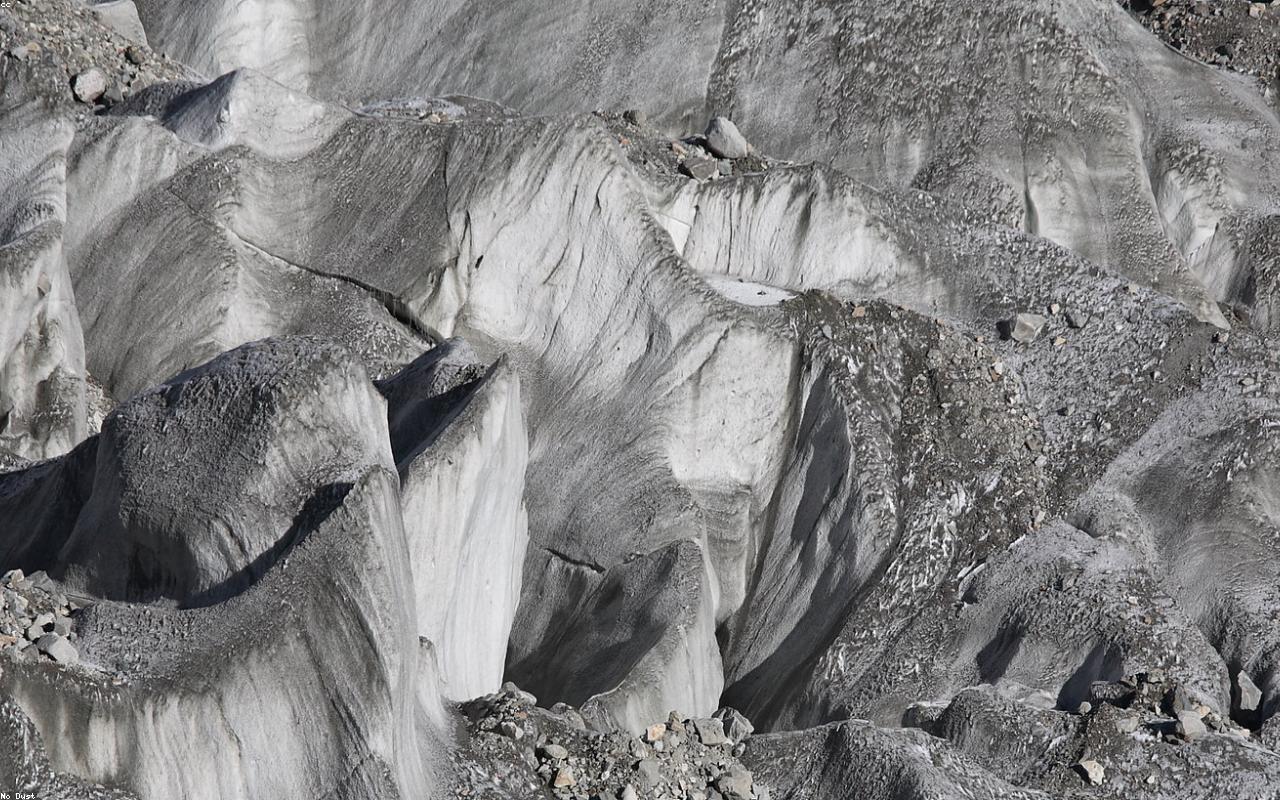
Base Camp was placed at the foot of the Hailuogou Glacier at 3,650 metres on 7 September. The route the party found, the north-west ridge, is still the standard line and has been climbed by perhaps three hundred parties in the ninety-four years since. The climb is technically demanding by Sichuan standards but does not involve extreme altitude relative to other major peaks in the region.
The summit day was the second attempt. The first, on 24 October, turned back at 7,200 metres in storm. The second, on 28 October, succeeded. Moore and Burdsall reached the top at three in the afternoon. Emmons, who was suffering from frostbite in both feet, had turned back at 7,400 metres with Young. The two summit climbers descended to high camp by nightfall and rejoined the others the next morning.
Emmons lost all of the toes on his right foot to amputation in Shanghai in December 1932. He continued to climb and made the second ascent of Mount Bertha in Alaska in 1940. He died in 1962 in a small-plane crash in the Cascades. His Minya Konka boot is in the collection of the American Alpine Club library in Golden, Colorado, alongside a wooden ice axe of the type carried by all four members of the party.
The descent route the party used to get out of China is, in retrospect, the more remarkable part of the expedition. Rather than retrace their three-month overland approach through warlord territory, the party walked south from Kangding through the Tibetan-speaking valleys of Muli, Yongning, and Lijiang, and exited the country at the French Indochina border at the Yunnan town of Hekou. The walk took ten weeks.
The route was the southern leg of the Tea Horse Road, the medieval trade route along which Sichuan tea had been carried to Tibet for a thousand years. The route was, in 1932, still substantially functional, with mule caravans of twelve to twenty animals passing the climbers daily. The party paid for room and board at trail villages with silver dollars and, when those ran out, with empty British biscuit tins, which had a cash value in the region.
Burdsall published the expedition's official account, Men Against the Clouds, co-written with Moore, in 1935. The book is the only book-length English-language account of the climb. It was reprinted in 1981 by the American Alpine Club and has not been reprinted since. A first edition in good condition sold at Bonham's in 2023 for fourteen thousand dollars.
The book's geographical detail is exceptional. Burdsall, the civil engineer, had carried a precision aneroid barometer and a transit theodolite, and his measurements of the mountain's height and of the Hailuogou Glacier's terminus position remain the most reliable pre-war data on the range. The Chinese Academy of Sciences glaciology programme, which has tracked the Hailuogou's retreat since 1958, uses Burdsall's 1932 measurements as its baseline.
The glacier has retreated 1,540 metres since 1932. The terminus, in 2026, sits at 3,540 metres, a hundred metres lower than the position Burdsall recorded. The retreat is consistent with the regional pattern in the eastern Tibetan Plateau and is not anomalous.
Minya Konka itself has, since 1980, been the subject of substantially more attention than in the previous five decades. The mountain was reopened to foreign expeditions by the Chinese government in 1980 and was climbed for the second time in October of that year by an American party. The second ascent took eight lives, including those of four members of the summit party. The route is now considered one of the more serious 7,500-metre objectives in Asia.
Of the 1932 climbers, none is alive. Burdsall died in 1953 in a fall from the south face of Aconcagua. Moore died in 1993 in Alaska, where he had been a long-time bush pilot and the second president of the University of Alaska. Young died in 1967 in Beijing, where he had returned in 1949 and worked as an interpreter for the Foreign Languages Press until his death.
Jack Young, who is the least remembered of the four, was the only Chinese-American member of the party and was the only one who spoke Mandarin. He had been recruited specifically for his language skills and had served as the expedition's interpreter and negotiator with the warlord administrations they passed through. The expedition would have been impossible without him.
His role is one paragraph in Men Against the Clouds. The book's chapter on the descent out through the Tea Horse Road, which depended entirely on Young's negotiations with trail-village headmen, does not mention him by name in its first ten pages.
The expedition's mountaineering record is solid. The first ascent of a 7,500-metre peak by a four-man party, in a politically unstable region, without loss of life, is a substantial accomplishment. The expedition's failure to be remembered is partly a function of its small scale, partly a function of subsequent geopolitics, and partly a function of the fact that the more famous American climbing expeditions of the decade — the 1932 and 1934 Nanda Devi attempts, the 1938 K2 attempt — were larger, better-publicised, and to more famous mountains.
Burdsall's wooden ice axe, the one in the American Alpine Club library, was made by the Bhend workshop in Grindelwald in 1925. He had bought it on a climbing trip to the Bernese Oberland and carried it for the rest of his climbing life. The shaft is hickory. The head is hand-forged steel. The leash is original. The wear on the pick, after the Aconcagua fall, is consistent with self-arrest. It is the only object in the American Alpine Club's collection that has been on the summit of both a Chinese 7,000-metre peak and the south face of Aconcagua. It sits in a glass case in the library reading room, second shelf, marked with a small printed card.