The pager went off in Phil Benbow's kitchen at 14:18 on Saturday, January 24, 2026. He was rinsing leeks. He put the leeks in a bowl, dried his hands on the dish towel, and walked through to the hallway where his rucksack already stood packed.
Benbow is fifty-eight and has been on the Llanberis Mountain Rescue Team since 1996. The call that afternoon was for two scramblers on the North Ridge of Tryfan. They had reported themselves cragfast above the Cannon, a famous diagonal flake of rock about a third of the way up the ridge. One of them had a phone, an Ordnance Survey GPS reading, and approximately no useful winter equipment.
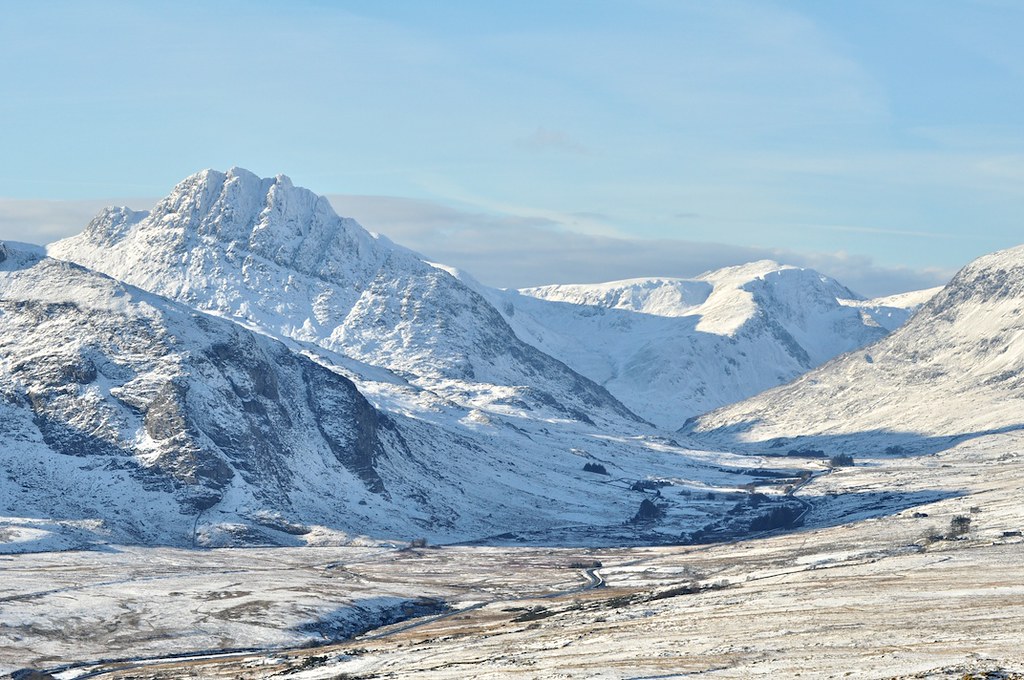
Tryfan is not a difficult mountain in summer. The North Ridge is a long scramble at grade one, the kind of route that experienced walkers use as their first taste of hands-on-rock terrain. In winter, with the rock glazed in clear ice and the heather underneath holding pockets of frozen snow, the same route becomes a serious mountaineering proposition. The Llanberis team has done, by team leader Aneurin Cadwaladr's count, fifteen Tryfan call-outs already this winter.
By 14:40 a six-person hasty party had left the team base at Nant Peris in two team Land Rovers. They drove the four miles to the Ogwen Valley car park at Llyn Ogwen, kitted up at the back of the vehicles, and started up the Heather Terrace approach at 15:12. The light, at that latitude on that date, would go at 16:48.
The lead climber on the hasty party was a woman named Elen Pryce, thirty-three, a paramedic in her professional life and a Mountain Instructor Award holder in her unpaid one. She and her partner, Iolo Tudur, broke trail through ankle-deep snow on the lower terrace and crossed onto the ridge proper at about the level of the Cannon at 16:05.
The casualties were where they had said they were. They were a couple from Manchester named Jay Holroyd and Amrita Sen. Holroyd was twenty-nine. Sen was thirty-one. Neither had crampons. Neither had an ice axe. Holroyd was wearing trail running shoes. Sen was wearing what Pryce later described in the team log as approximately the right boots for a wet day at Bowness-on-Windermere.
Sen had a suspected broken ankle from a slip onto a slab below the Cannon. She was sitting in a small heather pocket, with her good leg braced against the rock, holding a thermal blanket the couple had bought that morning at the Joe Brown shop in Capel Curig. Holroyd was uninjured but cold, and visibly upset.
Pryce did the initial assessment. The ankle was deformed but the foot was warm and the pulse was good. Sen was not in obvious shock. Pryce splinted the ankle with a SAM splint and an inflatable air splint, fed both casualties hot tea from a flask, and called down to base for the technical team and the stretcher.
The technical team arrived at 17:30 in full dark. They were six more team members, including Aneurin Cadwaladr, with a Bell stretcher and two hundred metres of static line. The wind on the ridge by that point was steady at twenty knots out of the northwest with gusts that the team's anemometer caught at thirty-two. The temperature was minus four Celsius. There was rime forming on the leeward side of every helmet.
The decision was made not to descend the ridge. The standard winter evacuation from Tryfan's upper third is east-down onto Heather Terrace and then south along the terrace to the descent path. It is longer but it does not involve technical lowering through the lower ridge's mixed ground.
Sen was loaded onto the stretcher at 18:14. The lower from the ridge onto Heather Terrace took ninety minutes and involved four staged lowers on the static line, each anchored to a combination of slung blocks and one piece of rock protection. The team has done this lower, by Cadwaladr's reckoning, more than thirty times.
The traverse of Heather Terrace, which is exposed in places and was that night running with verglas, took another two hours. Holroyd walked. Sen was carried by an alternating six-person team, rotating two pairs at the head and one at the foot.
The party reached the Ogwen Valley road at 22:48. The Welsh Ambulance Service had a vehicle waiting in the car park. Sen went to Ysbyty Gwynedd in Bangor. The ankle was a clean lateral malleolus fracture and was pinned the following morning. She was discharged on January 27.
Holroyd, when asked by Aneurin Cadwaladr at the back of the ambulance whether they had checked the weather forecast that morning, said that they had not. They had seen blue sky from their hotel window in Betws-y-Coed and had decided that day was the day.
The Llanberis Mountain Rescue Team is a charity. It runs on a budget of roughly one hundred and forty thousand pounds a year, almost all of it raised by public donation and from a small annual grant from the Welsh Government. Its forty-six team members are unpaid. The team responded to two hundred and sixty-nine call-outs in 2025, the highest number in its sixty-eight-year history.
Tryfan accounts for, in any given year, about a fifth of the team's work. It is the most-rescued mountain in Wales by some distance. The reasons are not mysterious. It is a famous mountain. It is close to a major road. It is just hard enough that people who underestimate it will get into trouble, and just popular enough that a steady supply of such people arrives at the car park every weekend.
What is sometimes lost in the conversation about repeat call-outs and underprepared walkers is what the call-out actually costs the team. Twelve volunteers gave up nine hours each on the evening of January 24, 2026. None of them got paid. Phil Benbow returned to his kitchen at 01:30 in the morning and put the leeks, which had been sitting in their bowl all evening, into the fridge. He cooked them on Sunday.
Aneurin Cadwaladr, asked the next week whether the team resented these jobs, said the team did not resent the jobs. The team resented the question. The team's view, Cadwaladr said, is that the people who get into trouble on Tryfan are exactly the people the team exists to bring down from Tryfan. The fact that some of them might have prepared better is not the team's business until after the stretcher is back in the Land Rover.