At 6:42 on the morning of 11 April 2026, twelve aspirant guides queued at the lower station of the Aiguille du Midi cable car with the same quiet, unshowy efficiency they had been told to demonstrate for the next three days. None of them spoke much. The examiners stood apart, holding paper coffee cups, watching.
This was the spring rock-and-mixed module of the IFMGA aspirant examination, the second of four such gates a candidate must pass in the French system before the pin is awarded. The cohort had come from six countries. Two were Slovenian, three French, one Spaniard from Bielsa, one from Quebec, one Norwegian, two Italians, one Welshwoman, and a man from Sapporo who had transferred his alpine certification from the Japan Mountain Guides Association.
The lead examiner that morning was Pascal Roget, fifty-eight, a Chamoniard who had been guiding professionally since 1989 and examining since 2008. He had a clipboard, a pencil tied to the clip with a length of orange perlon, and a small, weathered notebook in which he wrote nothing for the first four hours.
Roget's habit, the candidates had been warned, was to watch. He was looking less for technical errors, of which there would be many, than for the small admissions of judgement that revealed how a candidate thought when nobody was correcting them.
The route assigned to the first three-person rope was the Cosmiques Arête, an introductory mixed climb of moderate length that an aspirant should treat as a teaching environment. They were given a notional client, played that day by a French ski instructor named Margot Beauvois, who had been briefed to ask one or two reasonable questions and one mildly unreasonable one.
The Welshwoman, Bronwen Llewellyn-Price, led. She placed two cams in the first cracked block, weighted neither, and continued. Roget watched from twenty metres back, on his own short line, with the second examiner, an Italian called Tomaso Sartori.
At the first belay Llewellyn-Price reorganised the gear on her harness without looking at it, by feel, while explaining to Beauvois how she would manage the short ice section above. She did not over-explain. Roget made his first note.
The cohort was scattered across three routes that day, each shadowed by two examiners. The other two ropes climbed the Arête à Laurence and the lower section of the Pointe Lachenal traverse. By 14:00 they were back at the Aiguille du Midi platform, sun-tired, drinking water from the tap by the toilets.
That evening, in a hired meeting room at the Office de Haute Montagne in central Chamonix, the examiners debriefed without the candidates present. The conversation was procedural and unhurried. A failed placement at the third pitch of the Cosmiques was noted, but not, in itself, fatal. What was discussed at greater length was the moment a different aspirant had decided, on the upper Lachenal, to keep climbing past a small but real change in the snow surface.
The IFMGA system was created in 1965 in Zermatt, when the national guiding bodies of France, Switzerland, Austria, and Italy agreed to recognise one another's qualifications. Today its membership stands at twenty-five national associations, with provisional members and reciprocal arrangements with several others. The pin itself is small, brass, and worn on a jacket lapel or pack strap. Its presence is unmistakable to other guides and visible to nobody else.
The examination process in France is administered by the École Nationale de Ski et d'Alpinisme at the south end of Chamonix, in a building that looks more like a small ministry than a school. Aspirants come to it after a probatoire and two further years of supervised work. The full cycle, from probatoire to full certification, takes most candidates between six and eight years.
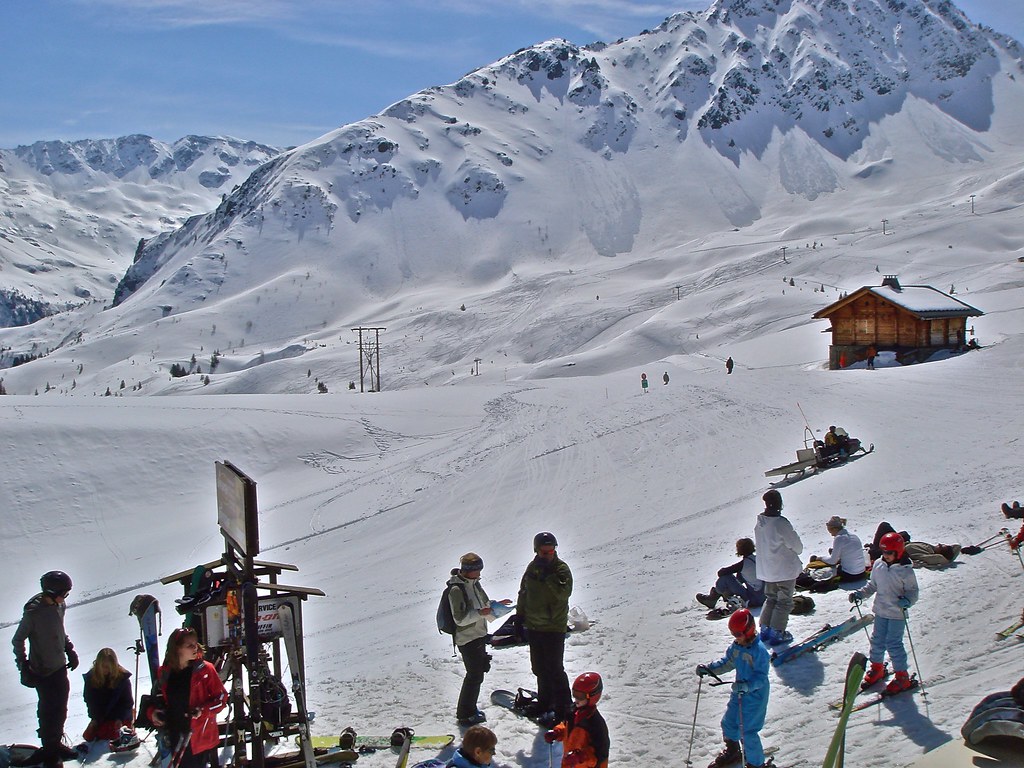
Day two of the spring module moved up-valley to the Argentière Glacier. The objective was a single-pitch teaching exercise on the south buttress of the Aiguille du Tour, with each aspirant rotating through the roles of leader, second, and observing examiner-in-training. The wind that morning was northerly at twelve knots, and the temperature at 3,540 metres was minus seven.
Henrik Solberg, who edits this magazine's Snow section, had been invited as a guest observer on day two only. His remit was narrow. He was to write nothing about specific candidates and to comment, if at all, only on the snow assessments. He had brought a small notebook of his own.
The aspirant from Sapporo, Daichi Maruyama, was asked to evaluate a forty-metre south-facing slope above the buttress for the descent. He cut a small pit, called for a column test, and then, before the examiner had finished writing, recanted his initial reading and asked for a second test eight metres further west. Solberg, after, said only that the second test was the one he himself would have asked for.
At the debrief that evening, Roget said that humility was not a personality trait the examination tested but a behavioural one. He meant that the panel was not interested in whether a candidate was modest. It was interested in whether a candidate could, in the field, correct themselves out loud, fast, and without apology.
Day three was a long mixed route on the Petite Aiguille Verte, in two-aspirant ropes with a single examiner on each rope. The Norwegian, Eivind Brattlid, and one of the Italians, Giulia Mancini, climbed together. They were observed by Sartori, who had said almost nothing for two days.
Brattlid placed an ice screw that worked. Mancini, at the next stance, used the screw to construct a belay that, the examiner noted, was efficient without being elegant. That distinction, in the IFMGA system, is consequential. Efficiency is the requirement. Elegance is an additional virtue.
By 16:30 on the third day, the cohort was back at the ENSA building, sitting in plastic chairs in a corridor, waiting for results. Two aspirants were told, individually and quietly, that they would need to re-sit the rock-and-mixed module the following spring. The other ten were told they had passed and would proceed to the summer high-mountain module in June.
Of the two who would re-sit, one took the news with a brief nod, and the other, an Italian called Marco Vesentini, sat down on a bench in the corridor and looked at his hands for a long moment before saying, in English, that he had expected as much. Roget, walking past, touched his shoulder and continued.
The examination is, by design, not adversarial. The examiners are required, by ENSA protocol, to write a single page of guidance for any candidate who does not pass, focused on the specific skills that need work. Vesentini's page, which was handed to him before he left the building, mentioned three things, one of which was the small unspoken adjustment a guide makes when a client is more tired than they have said.
The IFMGA pin, finally awarded after the autumn module, is in many ways the smallest object in the whole exercise. The candidates who earn it will, on average, work for another twenty-five years in the trade. Some, like Roget, will become examiners themselves. None will say much about the day they were tested. Most will keep the pin on the lapel of one particular jacket, the one they wore that day, and they will replace the jacket more reluctantly than they ought to.