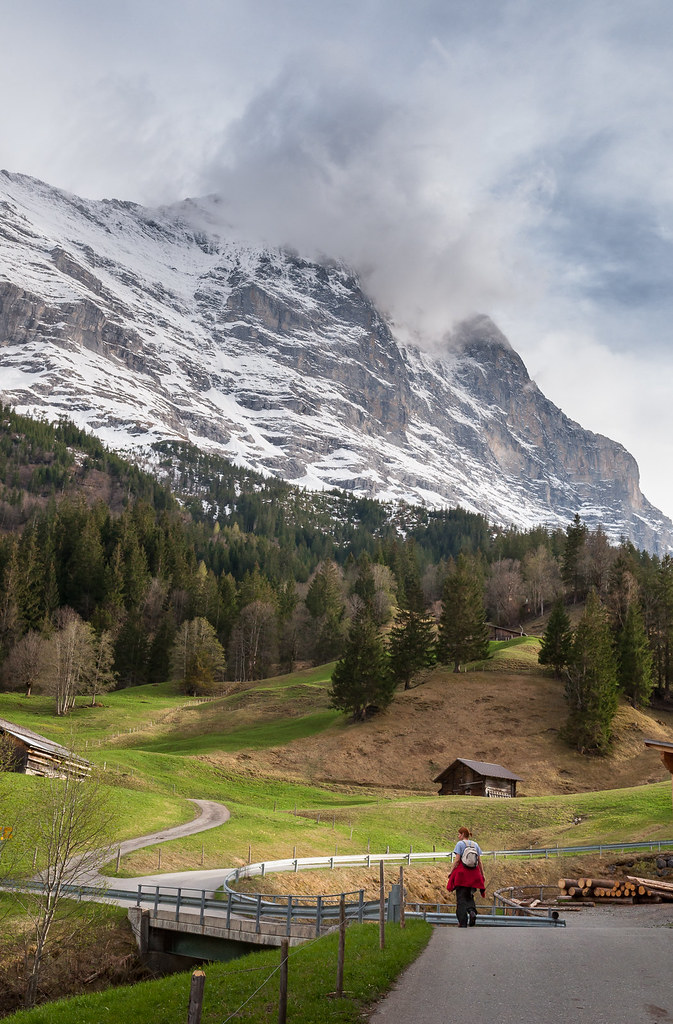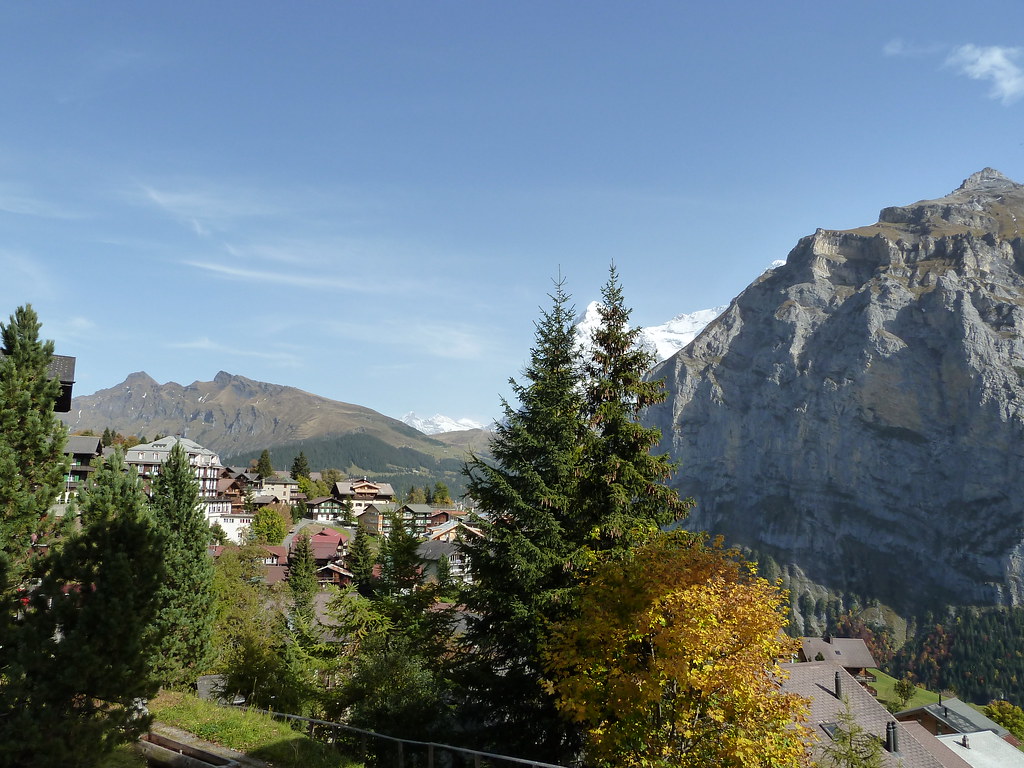
The cable hanging from the gallery window of the Kleine Scheidegg railway tunnel on the morning of July 22, 1936 was twenty metres of standard 7mm hemp rope. It was thrown out at first light by Albert von Allmen, the section guard, in answer to a voice he had heard for half the night through the rock.
The voice belonged to Toni Kurz, the only living member of a four-man expedition that had set out from Kleine Scheidegg four days earlier to attempt the first ascent of the Eiger's North Face. The others, two Bavarians and an Austrian named Edi Rainer, were already dead on the wall above him. Kurz had spent the night standing in his stirrups on a knotted rope, his left arm frozen and useless, the right arm doing what the left could not.
What happened in the following six weeks is generally taught as the story of Kurz's death, which it is, and of the first guides who reached the wall, which it also is. It is less often taught as the founding event of organised mountain rescue in the Bernese Oberland.
On July 18, four climbers had walked from the Eigergletscher station to the base of the North Face. They were Andreas Hinterstoisser and Toni Kurz of Berchtesgaden, Willy Angerer and Edi Rainer of Salzburg. Hinterstoisser was twenty-two. Kurz was twenty-three. The face above them had been attempted twice before and had killed every climber who had set foot on it.
By the morning of July 21 they were retreating. Angerer had taken a head injury on the second day from rockfall. Hinterstoisser had cut the traverse rope on the way up, assuming they would descend by a different line, and the absence of that rope cost them six hours of frostbitten searching for a downward route across what is now called the Hinterstoisser Traverse.
All four were swept by an avalanche on the second ice field on the afternoon of July 21. Hinterstoisser came off the rope and fell to the base. Angerer was strangled against the rock by his rope. Rainer hung dead on his belay. Kurz survived, standing in a loop of rope below Rainer's body, and called for help through the rock to von Allmen's gallery window for the rest of the night and into the morning.
The first formal rescue attempt was led by a Swiss guide named Christian Rubi, who came up from Grindelwald with three colleagues on the morning of July 22. They rode the train into the gallery, climbed out the same window von Allmen had used, and made their way along an exposed traverse to a point fifteen metres below Kurz.
Kurz, with one usable arm and his left hand frozen black to the wrist, attempted to lower himself the last fifteen metres on a doubled rope. The knot at the join, hand-tied by Kurz in the cold, jammed at his harness karabiner. He could not pass it. He could not climb back up. He hung above the guides for forty minutes, refusing their offer to climb further toward him, telling them in a voice the Swiss reporter Hans Schlunegger recorded as already half-absent that he could not go on. He died at roughly nine in the morning.
The guides could not reach the body. They returned to the gallery window and rode the train back to Kleine Scheidegg. Kurz's body remained hanging on the rope for thirty-three days.
On August 24, 1936, a recovery party led by the German guide Heinrich Harrer, who would later make the first ascent of the face, climbed to the body and cut it free. It fell roughly nine hundred metres to the base of the wall. Harrer and his party then descended and walked to the foot of the face to recover what remained. The bodies of Hinterstoisser and Angerer had already been brought down in late July. Rainer was cut from his belay in September.
The recovery of the four climbers was not the work of any organised rescue body. The canton of Bern had no formal mountain rescue service in 1936. Such rescues as had been mounted in the previous half-century were ad-hoc affairs, coordinated through individual guide bureaux at Grindelwald, Mürren, or Lauterbrunnen and paid for by the families of the dead.
What the 1936 events did was concentrate attention. The Swiss Alpine Club had been discussing a cantonal rescue service since the late 1920s. The bodies hanging from the Eiger that summer, photographed by a Daily Mail correspondent and printed on the front page of newspapers across Europe, made the discussion urgent.
By 1939 the Bernese Oberland had a formal volunteer rescue organisation, the Bergrettung Berner Oberland, with stations at Grindelwald, Lauterbrunnen, Meiringen, and Kandersteg. It was funded by the cantonal government, the railway companies that operated the Eiger gallery line, and the major guide bureaux. It exists today as part of the Swiss Alpine Club's Alpine Rescue arm.
The methods the 1939 service codified were drawn directly from what had failed in 1936. Fixed bolts were placed at intervals along the rail gallery to allow rescuers to traverse out to the face without the laborious anchor-building Rubi's team had improvised. A rope-throwing rifle, the Wurfrakete, was developed to fire a thin line across a stranded climber's position from below. Communication wire was strung from Kleine Scheidegg to the foot of the face.
None of this would have saved Kurz. The knot that jammed at his karabiner was a problem no equipment could solve from below. But the 1936 events did establish, in the institutional memory of the canton, that climbers on the Nordwand could not be left to die in the eye of a railway window without an organised response.
The subsequent history of Eiger rescues is a long one. Between the first ascent of the wall in July 1938 and the year 2025, more than seventy climbers have died on the face. The Bergrettung Berner Oberland and its successors have brought down, by their own count, more than two hundred and forty bodies and rescued more than three hundred living climbers.
The 1957 recovery of Stefano Longhi and Claudio Corti, which took eighteen days and involved the first use of a helicopter on the wall, is sometimes given as the moment modern mountain rescue arrived on the Eiger. It was, more honestly, the moment the lessons of 1936 were fully applied.
Albert von Allmen, the section guard who first heard Kurz's voice through the rock and opened the gallery window with a hammer, lived in Grindelwald until 1961. He gave one short interview to a Bernese newspaper in 1948 in which he said that he still heard the voice some mornings, and that the rock had not, in his hearing, ever quite given it back.