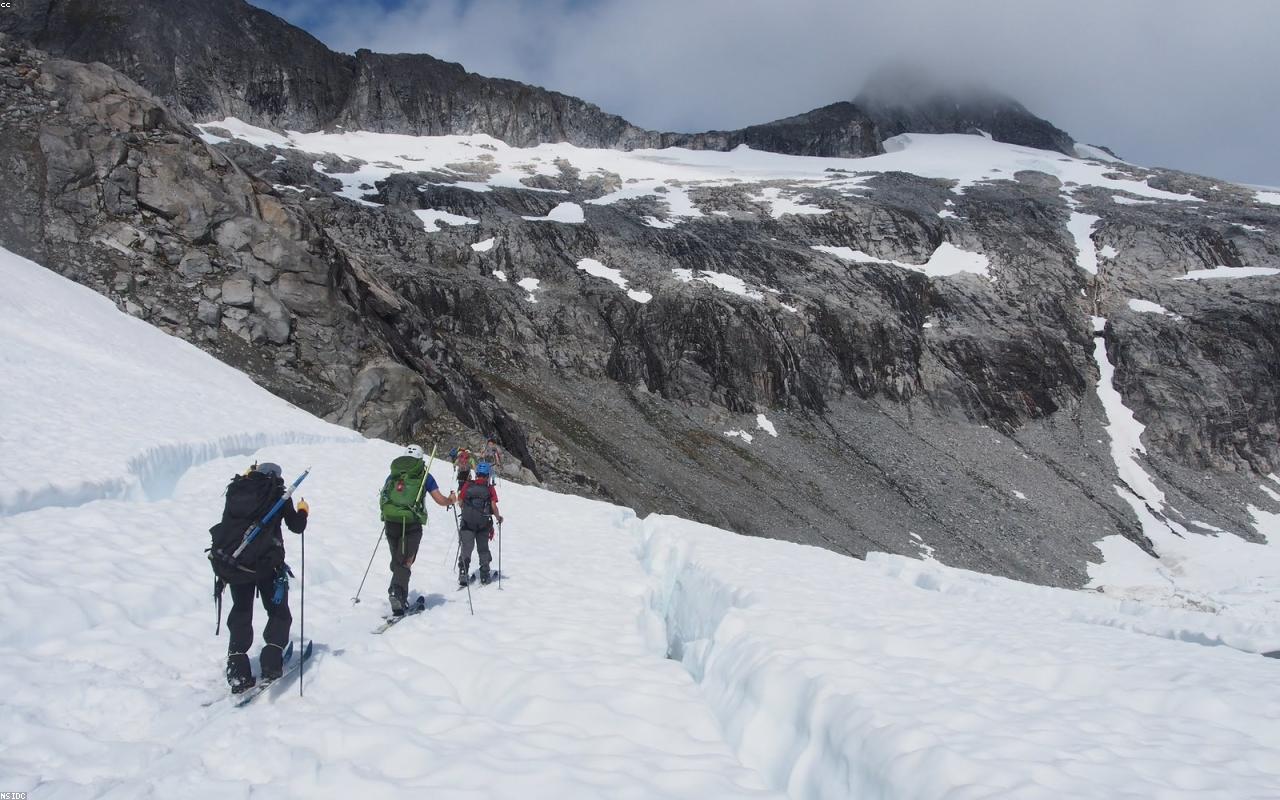
The Kaskawulsh Glacier is a sixty-five kilometre tongue of ice that flows out of the Saint Elias Mountains in southwestern Yukon, drains into a single great valley, and ends in a forefield of meltwater channels that drain, since a re-routing event in 2016, into the Kaskawulsh River and the Yukon basin rather than, as previously, into the Slims River and the Bering Sea.
On the morning of 11 May 2026, a four-person research team from the University of Northern British Columbia and the Canadian Geological Survey landed by helicopter on the upper accumulation zone of the glacier, at an elevation of 2,640 metres, to begin a twelve-day field season of snow and ice measurements.
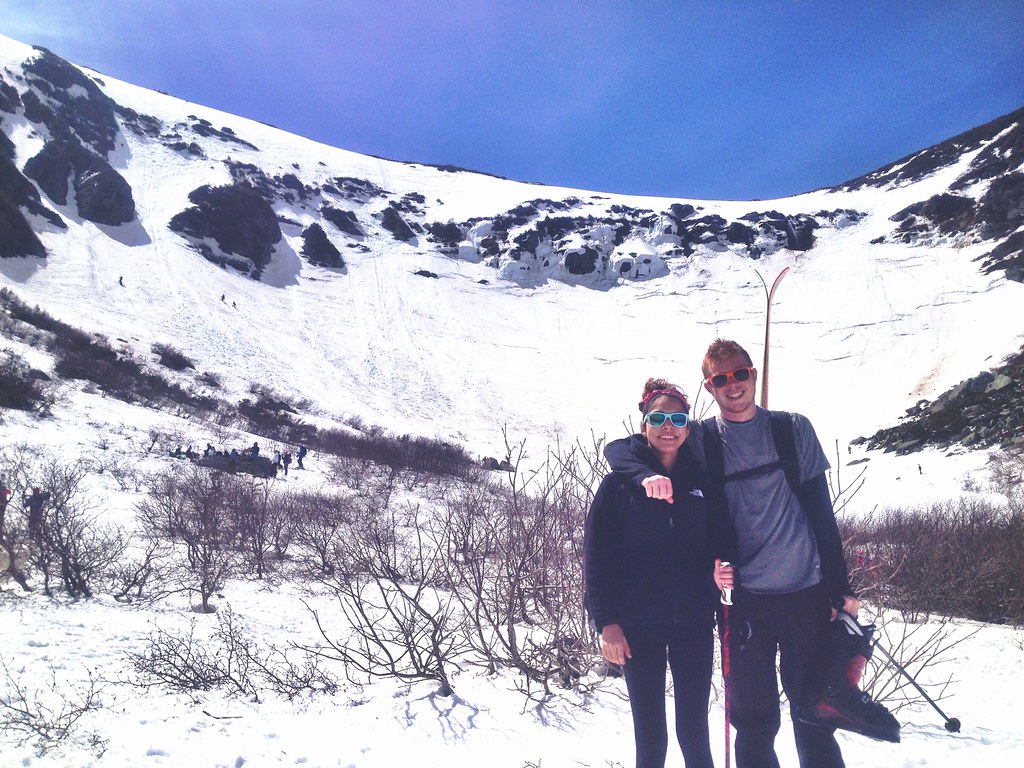
The team consisted of Sara Mohajer, the principal investigator, 39; her PhD student Naveed Khoury, 28; a technician named Janelle Pottinger, 47; and a fourth, hired specifically for his skill on the rope, an IFMGA mountain guide from Whitehorse named Brody Kassbohrer, 51.
Their objective was to take a snowpit profile at each of seven pre-established stations on the upper basin, to measure the depth and density of the winter's accumulation, and to retrieve two ice cores of approximately twelve metres each from a site near the basin's south wall.
The work has been done at this site every May since 2009. The measurements feed into the long-term monitoring of the Kaskawulsh and, by extension, into the broader Canadian effort to track the response of the Saint Elias glaciers to warming. The Saint Elias hold the largest non-polar mass of ice on Earth. They are losing it.
The team's first day was given over to camp. They erected three Hilleberg tents at a site that had been used for the same purpose since 2014, dug a snow kitchen, established a toilet pit at a regulated distance downwind, and ran a guy-line perimeter around the camp to provide a tactile reference in white-out conditions.
The work began the next morning at 0700.
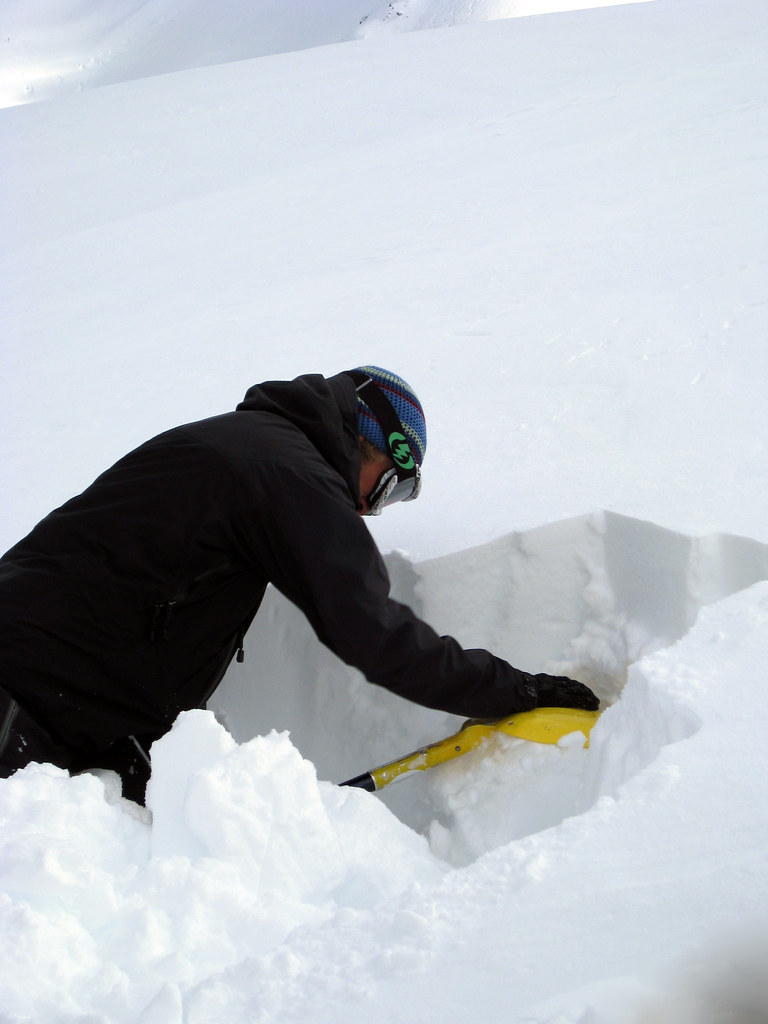
A snow profile on a high-altitude glacier accumulation zone is, in most respects, the same procedure as a snow profile in any mountain context. The observer digs a pit to the previous summer's surface, identifies and measures each layer of snow, records density at standard intervals, and notes the depth and characteristics of any ice lenses or melt features.
The difference is in the depth. At Station 1, the most exposed of the seven sites, Khoury and Pottinger dug to a depth of 4.7 metres before they reached the previous summer's surface, which appeared as a thin, slightly dirtier layer with a discernible crust. The winter's accumulation, in water-equivalent terms, was 1.92 metres at that station.
The thirty-year mean at the same station is 2.14 metres water-equivalent. The winter of 2025-26 was, in that respect, a slightly below-average accumulation year, continuing a trend that has been evident in the Kaskawulsh record since approximately 2010.
Mohajer noted this without surprise. She has been working on the glacier since her own PhD field seasons in 2011 and 2012 and has watched the accumulation rates decline, year by year, with what she described in a tent conversation on the third evening as a kind of slow, accumulating sadness rather than a specific alarm.
She does not write it in those terms in the published papers.
The two ice cores were retrieved on the fifth and sixth days, using a hand-operated drill of the kind designed by the Polar Ice Coring Office in the 1990s. Each core, recovered in segments of approximately one metre, was logged, photographed, and packed into insulated tubes for return by helicopter to the cold-storage facility at the UNBC laboratory in Prince George.
The cores contained, by visual inspection, between fourteen and seventeen distinct annual layers, depending on the section. Each annual layer carried a record, in the chemistry and physical structure of the ice, of the temperature, precipitation, atmospheric dust, and trace pollutants of the year in which it fell. The 2017 layer, in both cores, contained a clearly visible ash horizon from the eruption of the Bogoslof Volcano in the Aleutians earlier that year.
Khoury, who had not been on the glacier before, photographed the ash horizon at some length. He spent an evening explaining its significance to Kassbohrer, who listened politely and then asked, accurately enough, whether the same thing had happened in 1912 with Novarupta. Khoury said yes, and added that they would probably see that layer when they reached the deeper section in the lab.
The weather, during the field season, was good in a way that was itself somewhat unsettling. Daytime temperatures at the camp reached plus 3 Celsius on three afternoons. The same camp had, in 2009, recorded daytime highs of minus 6 in the same week of May. Mohajer wrote in her field journal that the camp had become, in seventeen years of her own observation, measurably warmer.
On the seventh evening, a small melt event began on the upper surface of the glacier near the camp, and a thin film of water moved through the snow. By morning the surface was crusted, the temperature had dropped, and the event was over. But the water that had moved through the snow had carried with it, into the deeper layers, a small change in the temperature and stratigraphy of the pack.
Pottinger, who has worked as a glaciology technician for twenty-two years, said over coffee the next morning that she had not seen surface melt in May in 2008, when she did her first Kaskawulsh season. By 2016 she had seen it occasionally. By 2026 she expected it.
The team finished its program on the eleventh day, packed the cores into the tubes, broke camp on the morning of the twelfth, and was lifted out by helicopter to Haines Junction at 1430.
The data, when processed, will be added to the seventeen-year time series and incorporated into the next iteration of the Canadian mass-balance model for the Saint Elias. The model is used, among other things, to predict the future contribution of the range's glaciers to global sea level rise.
Mohajer, asked on the helicopter what she expected the data to show, said only that she expected it to confirm the trend. She said she would like to be surprised by the data one of these years and that she had not been surprised, in a hopeful direction, since 2011.
The 2026-27 field season is scheduled for the second week of May.